

Buyers relocating within Northern California run into this comparison constantly – the Sacramento region versus the East Bay. It’s not a simple call. Housing budgets, commute requirements, and how you actually want to spend your weekends all pull in different directions, and the financial gap between these two markets is significant enough that it tends to drive the decision more than anything else. Weighing the pros and cons of living in Roseville, CA helps clarify this choice.
Roseville has become a serious destination for buyers who want real purchasing power without giving up modern amenities. The median home sale price there sits around $660,000 – a number that reads very differently once you’ve spent any time looking at Danville’s pricing. Understanding how each market actually operates will save you from making assumptions that don’t hold up.
Market Pace and Housing Costs
Roseville moves fast. Homes are averaging 21 days on market, nearly 38% of properties are selling above list price, and the supply sits at roughly two months – which means sellers have the edge, but you’re not completely shut out. There are about 342 active listings at any given time, so buyers who are prepared can still find opportunities.
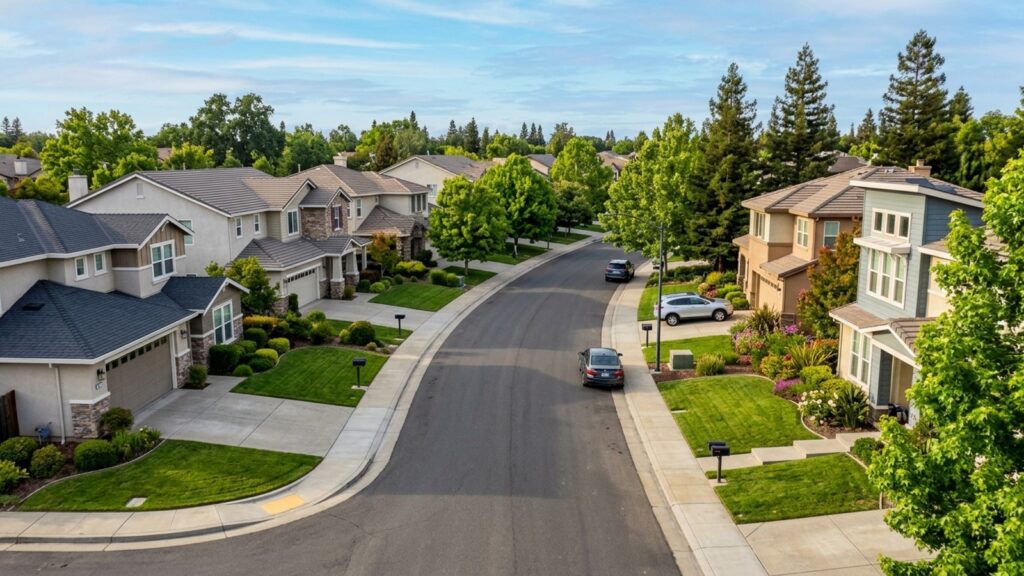
Danville operates in a different tier entirely. Larger lots, higher price points, and the full weight of East Bay demand. Buyers who make the move from Danville to Roseville consistently tell me they’re surprised by what $660,000 actually buys – newer construction, more square footage, and updated energy standards that older Bay Area homes simply don’t have.
One cost that catches people off guard is Mello-Roos. California’s base property tax rate is consistent statewide, but your total monthly carrying cost in a newer Roseville development will include supplemental local assessments and Mello-Roos fees that don’t show up in the headline price. Budget for those before you fall in love with a floor plan. Danville’s higher property valuations drive a larger tax bill there, so neither market is without its own carrying cost considerations.
Commute Routes and Regional Access
Roseville sits along the I-80 and Highway 65 corridors, which puts downtown Sacramento 30 to 45 minutes away depending on morning traffic. The Capitol Corridor train gives you a real alternative to driving if your employer is positioned near a station stop.
Danville runs on Interstate 680 for access to San Francisco, Oakland, and Silicon Valley. That commute involves heavier traffic volumes and bridge crossings – manageable if you’ve been doing it for years, but worth thinking hard about if you haven’t. For anyone who genuinely needs to be in a Silicon Valley office regularly, Danville’s location is simply more practical than anything in the Sacramento region.
Remote and hybrid schedules have reshuffled the math here. If you’re in the Bay Area once or twice a month, Roseville’s lower housing costs start to look very rational. If you’re in a San Francisco or San Jose office multiple days a week, that calculus flips quickly.
Climate Differences and Outdoor Access
Roseville gets hot. The Sacramento Valley sees frequent stretches of 100-degree days in July and August, and that’s not a rounding error – it’s months of serious heat. Danville pulls in coastal marine influence that cools things down considerably by evening. If you’re moving inland from the East Bay, the summer adjustment is real, and your air conditioning bill will reflect it.
That said, both cities have genuinely good outdoor access – just different kinds. Roseville puts you at Folsom Lake immediately and less than two hours from Lake Tahoe’s ski resorts. Danville has Mount Diablo State Park and the Iron Horse Regional Trail essentially at the door. Roseville also maintains an extensive paved off-street trail network connecting neighborhoods and retail centers, which is more useful day-to-day than it sounds. Danville’s historic downtown gives you a walkable core with local dining and shops that Roseville’s more suburban layout doesn’t replicate.
Neither picture is obviously better. It depends what you actually do on a Saturday.
Frequently Asked Questions
How much more affordable is the housing market in Roseville, CA compared to Danville?
Roseville’s median home sale price runs around $660,000. Danville properties sell for considerably more, reflecting their East Bay location. The practical result is that buyers can generally get a larger, newer home in Roseville at a lower purchase price than what comparable money buys in Danville.
Will I save on property taxes and overall cost of living by moving from Danville to Roseville?
Yes, in most cases. California property taxes are based on the home’s purchase price, so buying at Roseville’s price point generates a lower tax bill than buying at Danville’s higher valuations. Day-to-day expenses – groceries, local services – also tend to run lower in the Sacramento region.
How do the public school districts in Roseville stack up against Danville’s schools?
Both cities have well-regarded public school systems with strong community support. Danville falls under the San Ramon Valley Unified School District. Roseville students attend various local districts depending on which neighborhood they’re in. You’ll want to check the specific district boundaries and enrollment data for any address you’re seriously considering – don’t assume coverage based on city limits alone.
Is the summer heat in Roseville, CA significantly worse than in Danville?
Yes. The Sacramento Valley regularly sees daytime highs over 90 degrees, and Roseville is no exception. Danville’s East Bay weather patterns keep things cooler. Residents in Roseville offset the heat through higher air conditioning use and community pools, but it’s a genuine lifestyle difference worth understanding before you commit.
How does the daily commute to major Bay Area or Sacramento job hubs differ between the two cities?
Danville gives you a more direct shot at Bay Area tech hubs via Interstate 680. Roseville connects easily to Sacramento via I-80 and Highway 65. Commuting from Roseville to San Francisco on a daily basis isn’t practical given the distance – that’s not a minor inconvenience, it’s a real constraint.
What are the biggest lifestyle and community differences when choosing to buy a home in Roseville over Danville?
Roseville is a suburban environment built around large retail centers and proximity to Sierra Nevada recreation. Danville offers a historic downtown feel with immediate access to East Bay parks, including Mount Diablo. Whether you’d rather be oriented toward the coast or toward the mountains is probably the most honest way to frame the decision.