

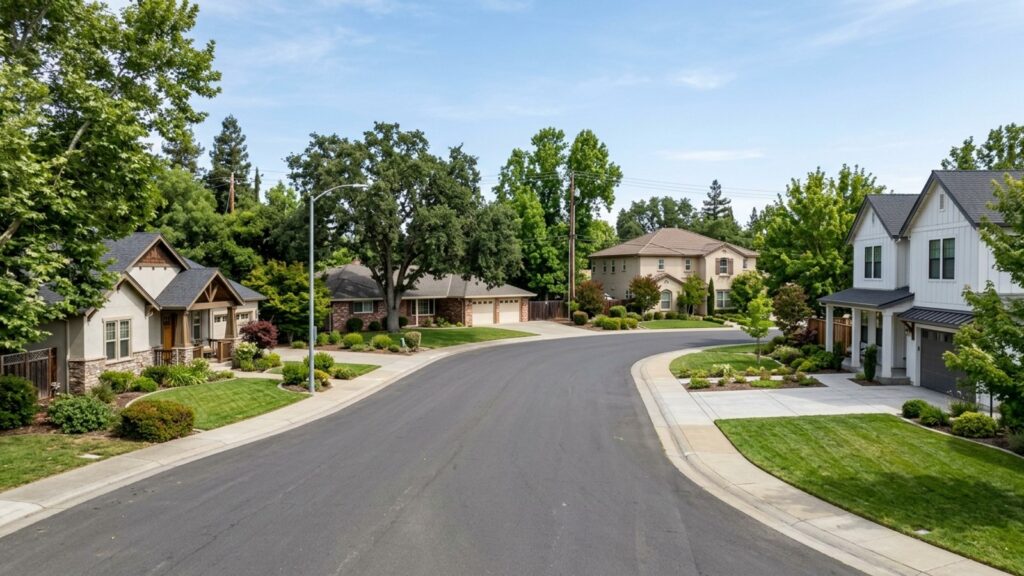
Sacramento’s surrounding cities each have their own personality, and the gap between Roseville and West Sacramento is wider than the 20-or-so miles between them. The pros and cons of living in Roseville, CA often center on its location; the city sits about 20 miles northeast of the state capitol along Interstate 80 – suburban through and through. West Sacramento sits directly across the Sacramento River from downtown, close enough that you can see the capitol dome from the right window.
Which one makes sense for you comes down to three things: your commute, your budget, and the kind of neighborhood you actually want to live in. Both cities have held steady real estate demand through the middle of 2026. Before you make an offer in either place, it’s worth getting a clear look at current inventory and local amenities – because they’re genuinely different animals.
Home Prices and Market Pace
In May 2026, Roseville’s median sale price landed at approximately $660,000, up about 3.6% year-over-year. Homes are moving – averaging roughly 21 days on market before going under contract. There are about 342 active listings and a two-month supply of inventory, so you’ll have some choices, but don’t expect a buyer’s paradise.
Almost 40% of Roseville homes have sold above asking price recently. The average sale-to-list ratio sits right near 100%. Sellers are getting what they ask for, which means you should build your offer on recent comparable sales rather than hoping for a discount that isn’t coming.
West Sacramento is a different picture. The market there mixes newer riverfront developments with older established neighborhoods, and pricing reflects that range. Because figures shift frequently, you’ll want a local agent pulling current numbers for any specific West Sacramento property you’re considering. Proximity to downtown tends to push prices up – particularly for anything with a river or capitol view.
Commuting to Downtown and Regional Transit
West Sacramento’s relationship with downtown Sacramento is about as close as it gets. The two cities share multiple bridges – the Tower Bridge and the I-80 Business Loop among them – and on a normal day you’re looking at ten minutes or less to get from one side of the river to the other. If you work downtown, that proximity is hard to argue with.
Roseville is a different calculation. The 20-mile run down Interstate 80 can take anywhere from 30 to 50 minutes during peak morning and evening hours, depending on traffic. If you’re seriously considering Roseville and you work in the central city, drive the route during your actual commuting windows before you commit. That difference matters every single day.
Both cities have regional transit options, though they’re structured differently. West Sacramento connects into the bus systems serving the downtown core. Roseville runs its own local transit and operates commuter bus routes directly into Sacramento – a real alternative if you’d rather not deal with the freeway every morning.
Neighborhood Layouts and Local Amenities
Roseville covers significantly more ground than West Sacramento and has the suburban infrastructure to match – large shopping centers, medical facilities, extensive walking trails, and a wide network of parks woven into residential subdivisions. If you want a detached home with a yard and easy driving access to everything you need, Roseville is built for exactly that.
West Sacramento reads differently depending on which part you’re in. The riverfront neighborhoods are higher-density, with waterfront walking paths, minor league baseball nearby, and easy access to local dining. Drive further west and the city shifts into more conventional single-family neighborhoods that feel considerably quieter.
Honestly, it often comes down to how you want to spend your weekends. Roseville puts you close to serious retail and a straightforward drive up into the Sierra Nevada foothills. West Sacramento puts downtown Sacramento’s arts, dining, and entertainment a short walk or drive across the bridge. Neither is better – they’re just different.
Frequently Asked Questions
How do average home prices and property taxes in Roseville compare to West Sacramento?
As of mid-2026, Roseville’s median home price is around $660,000. West Sacramento prices vary considerably depending on whether you’re looking at a newer riverfront build or an older inland home. For exact property tax rates, check current county assessor data for Placer County (Roseville) and Yolo County (West Sacramento) directly – those numbers shift and deserve a current look.
Is the daily commute to Downtown Sacramento longer from Roseville than from West Sacramento?
Yes, meaningfully so. West Sacramento sits across the river from downtown and the drive is often ten minutes or less. Roseville is about 20 miles northeast, and Interstate 80 during rush hour can stretch that to 30 to 50 minutes.
Are the public schools in Roseville, CA better for buyers than those in West Sacramento?
School district boundaries and offerings differ completely between the two cities. Review specific district boundary maps and verify current state educational data for Placer County and Yolo County schools. Which district fits your situation depends on the programs and facilities that matter to your family.
Will I have to pay mandatory flood insurance if I buy a house in West Sacramento instead of Roseville?
It depends on the specific property and current FEMA flood maps. West Sacramento sits along the river and has historical flood zones, though the city has invested in levee improvements over time. If a home falls in a designated high-risk flood zone and you’re carrying a mortgage, your lender will require flood insurance.
What are the main lifestyle and neighborhood amenity differences between living in Roseville versus West Sacramento?
Roseville is traditional suburban – large retail centers, medical complexes, extensive park networks. West Sacramento blends suburban streets with dense riverfront areas and puts you immediately adjacent to downtown Sacramento’s entertainment. Roseville puts you closer to Sierra Nevada foothills access. They serve genuinely different preferences.
Which real estate market historically offers better long-term resale value, Roseville or West Sacramento?
Both have shown steady demand over time. Roseville carries consistent appeal through its suburban infrastructure and reliable inventory, with homes currently selling in about 21 days. West Sacramento benefits from ongoing riverfront development and proximity to the state capitol, which keeps it attractive to downtown commuters. Neither market has a clear edge on this one – it depends on what you’re buying and where.