

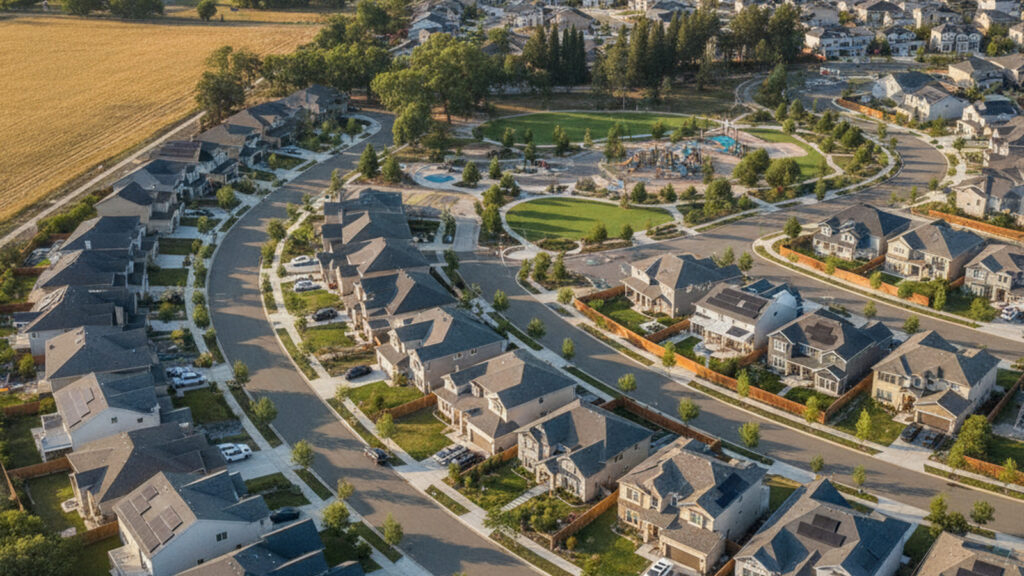
The median home price in Placer County reflects a region that has transformed dramatically over the last century. Buyers looking at new construction in West Roseville today are standing on land that was once dominated by agriculture and rail lines. Modern subdivisions have completely reshaped the landscape.
The history of Roseville, CA is tied directly to the expansion of the American West and the development of the First Transcontinental Railroad. Understanding how this area grew from a small trading post into an economic powerhouse provides helpful context for anyone buying property here today.
Understanding the local origins reveals why the city is laid out the way it is today. From the historic grid streets near the rail lines to the winding suburban roads of the newer master plans, every neighborhood reflects a specific era of growth.
The First Inhabitants and the Gold Rush Era
Long before the first tracks were laid, the Maidu people inhabited the land along the creeks of the Sacramento Valley. They relied on the area’s abundant oak trees, processing acorns into a dietary staple. Their deep connection to the local waterways shaped the earliest human settlements in the region.
The landscape shifted permanently in 1848 when gold was discovered at Sutter’s Mill nearby. Thousands of prospectors flooded into the region that would eventually become Placer County. This massive migration forced rapid changes upon the existing environment and the indigenous communities.
While Roseville itself was not a primary mining camp, it quickly became a supply point for miners heading higher into the foothills. Farmers and ranchers settled the flatlands to feed the booming mining population. These early agricultural roots laid the groundwork for the town’s future as a shipping hub.
Although the gold rush brought wealth to the broader region, agriculture sustained this specific area long-term. Wheat fields and fruit orchards eventually covered the flatlands. This agricultural base proved far more stable than the boom-and-bust cycle of the mining camps.
Becoming a City Between 1864 and 1909
The Central Pacific Railroad reached the area in 1864 as part of the First Transcontinental Railroad project. At the time, the settlement was simply known as “Junction” because the new tracks crossed an existing line connecting Folsom and Lincoln. This intersection made the small town an immediate focal point for regional transit.
The turning point for local real estate came when the Southern Pacific Railroad decided to move its major facilities down from nearby Rocklin. The steeper grades in Rocklin made it difficult to assemble long freight trains. Railroad engineers needed flat land to build a larger rail yard, and Junction offered the perfect geography.
Moving the rail yard to the flatter terrain spurred a massive local building boom. The city of Roseville officially incorporated in 1909 to manage the rapid influx of railroad workers and businesses. Housing construction surged as workers needed homes within walking distance of the new train facilities.
The incorporation in 1909 brought organized city services like a fire department and a municipal sewer system. These civic improvements made the area attractive to long-term residents rather than just transient workers. The resulting stability helped establish the first permanent commercial districts along Vernon Street.
The Pacific Fruit Express and the Ice Capital
By the early 1900s, California’s agricultural output was surging, but shipping fresh produce across the country presented a massive logistical challenge. The solution came in the form of the Pacific Fruit Express. This operation required an immense amount of infrastructure to keep produce cold during long journeys eastward.
This joint venture between the Southern Pacific and Union Pacific railroads established the largest artificial ice plant in the world right in the local rail yard. Workers manufactured thousands of tons of ice daily to load into refrigerated boxcars. Trains from all over the Central Valley routed through the city to receive their ice before crossing the Sierra Nevada.
The constant output from the ice plant transformed the economy of Roseville into a major industrial hub. The constant need for labor stabilized the local housing market, creating steady demand for homes near the tracks. Generations of local families built their livelihoods around the ice plant and the shifting train schedules.
By the mid-20th century, the advent of mechanical refrigeration in rail cars eventually phased out the need for artificial ice. The massive ice plant was dismantled, but the rail yard itself continued to expand. Today, the footprint of those early industrial operations still defines the physical center of the city.
Preserving the Past in Old Town
Buyers interested in historic architecture often focus their search on Old Town and the neighborhoods surrounding Vernon Street. These areas feature early 20th-century bungalows on smaller, traditional grid lots. Mature trees and walkable streets give this district a distinct feel compared to the newer subdivisions.
The Roseville Historical Society operates the Carnegie Library Museum, which documents the city’s early development. Inside, visitors can view a massive 1/160 n-scale model of the 1973 rail yard. The museum itself is housed in a classic 1912 building that originally served as the town’s first permanent library.
Just down the street, the Roseville Telephone Museum chronicles the evolution of local communication. The exhibits trace the history of the independent telephone company that served the area for decades. The museum opens to the public on the first Saturday of each month from 10 am to 2 pm.
Real estate in this historic core appeals to buyers looking for character and walkability. Many of the original commercial buildings have been repurposed into local restaurants and boutique shops. This revitalization effort has turned the older blocks into a prominent destination for evening entertainment.
Modern Growth and Placer County Real Estate
The population growth over the last few decades has pushed development outward into East Roseville and West Roseville. Master-planned communities have replaced the open fields, bringing new parks and shopping centers. These newer developments feature larger lot sizes and modern homeowner associations.
Shoppers now frequent massive retail hubs like the Westfield Galleria and the Fountains at Roseville. These commercial centers drive enormous tax revenue and provide thousands of local jobs. The shift toward retail and healthcare has successfully diversified the city away from its pure railroad origins.
The Roseville Joint Union High School District continues to expand to meet this population demand. In 2026, Roseville High School is completing a $40 million modernization project to update its older facilities. These educational investments remain a major draw for buyers moving into Placer County.
Commuters living in these newer subdivisions rely on Interstate 80 to reach Sacramento. Peak drive times to downtown Sacramento run about 45 to 60 minutes, while off-peak trips take 25 to 30 minutes. Highway 65 also provides a direct route northward toward Lincoln and the growing tech corridors.
The continued expansion of West Roseville demonstrates the ongoing demand for housing in this region. Builders are actively developing the final remaining agricultural parcels on the city’s western edge. Even as the area modernizes, the city maintains its historical connection through its street names and preserved public spaces.
Frequently Asked Questions
How did Roseville, CA get its name?
The origin is a bit of a local debate among historians. The most popular theory is that early settlers named the town after the wild roses that grew abundantly in the nearby ravines. Other stories suggest it was named after a specific resident or a popular waitress who worked at a local diner.
Is Roseville still a railroad town?
The Union Pacific rail yard remains the largest facility of its kind on the West Coast, continuing a legacy that started in the 1800s. However, the local economy has expanded over the decades. Healthcare, technology, and retail now employ a much larger percentage of the local workforce.
What is the oldest building in Roseville?
The Odd Fellows building on Pacific Street is widely considered the oldest surviving commercial structure in the city. Built around 1878, it stands as a rare remnant of the early trading post era. Many of the other original wooden structures were lost to fire or redevelopment over the last century.