

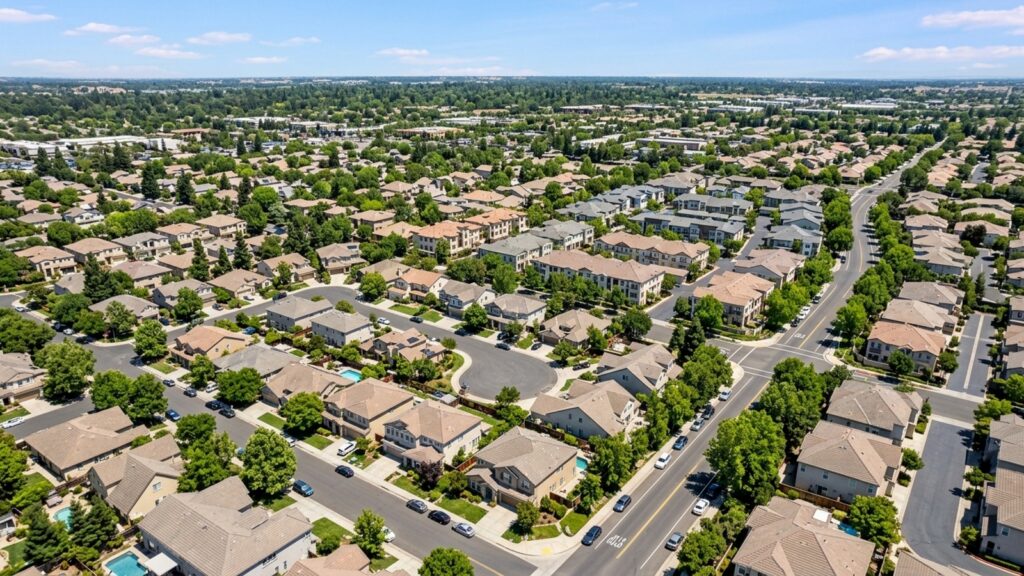
The median sale price for a home in Roseville, CA, is sitting around $660,000 right now. If you pull up the local data on the Roseville, CA, housing market, what you’ll see is a market that hasn’t gone haywire in either direction – just steady, with modest upward momentum carried through the first half of 2026.
Placer County stays active for good reason: the local economy is solid, and the housing stock runs the full range from established neighborhoods to new master-planned communities. Whether you’re buying or selling this year, the inventory numbers and holding costs are where you’ll want to start.
Current Trends and Home Prices in Roseville
Home values in Roseville are up roughly 3.6% year-over-year, and around 169 homes sold in the most recent reporting period – enough volume to confirm there’s real, consistent demand across the city. This isn’t a market running on speculation; it’s running on a stable job base and steady population growth.
For buyers, that translates to firm pricing. Updated, move-in-ready properties aren’t sitting. Sellers are getting close to their asking price, and that’s not likely to change much in the near term.
Inventory Levels and Time on Market
About 342 homes are available right now, which works out to roughly a two-month supply. A balanced market needs somewhere between four and six months of inventory, so Roseville is leaning toward sellers – not dramatically, but enough to matter.
The median time on market before a property goes under contract is about 21 days. That’s not a lot of runway. Get your financing sorted before you start seriously touring homes, because hesitation is expensive here.
Local Economic Drivers
Roseville’s property values don’t exist in a vacuum. The commercial base supporting them includes Hewlett-Packard, Kaiser Permanente, Sutter Health, Adventist Health, and Union Pacific Railroad – a mix that spans healthcare, technology, and logistics in a way that doesn’t leave the local economy exposed to one sector’s bad quarter.
Retail is part of the picture too. The Westfield Galleria at Roseville, the Roseville Automall, and Fountains at Roseville anchor a retail corridor that draws traffic from well beyond city limits and keeps local employment numbers healthy.
Property Types and Neighborhood Developments
The housing stock here is genuinely varied. You’ve got newer single-family homes, townhomes, condos, and a significant share of master-planned communities with modern amenities and structured neighborhood design. If you’re downsizing in Roseville and open to an active-adult setup, 55-plus communities like Sun City Roseville – built around single-story homes – are part of the conversation too.
The point is: your options aren’t narrow. Budget and space requirements will do most of the filtering.
Popular Areas and New Zoning
The neighborhoods buyers tend to gravitate toward include East Roseville Parkway, Morgan Creek Village, Eskaton Village, Diamond Oaks, Westpark Village, and Whitney Ranch. West Roseville is seeing real growth, with median home prices in some of its newer subdivisions running around $665,000.
On the supply side, the city isn’t standing still. The 2026 initiatives tied to the Commercial Corridors Specific Plans are targeting the Douglas-Harding, Douglas-Sunrise, and Atlantic Street corridors for redevelopment – with plans to add up to 850 multifamily housing units. That won’t flip the market overnight, but it’s worth knowing it’s in motion.
Taxes and Holding Costs
This is the part buyers sometimes underestimate, so let’s be specific. The base effective property tax rate in Placer County runs between 1.1% and 1.18% of assessed value. In many of the newer developments – particularly in West Roseville – you’ll also encounter Mello-Roos assessments, which are special tax districts that fund local infrastructure and public services. They add to your monthly number in ways the list price won’t tell you.
HOA dues show up regularly in master-planned communities, typically ranging from $100 to $250 per month. One thing that does work in residents’ favor: Roseville Electric is a city-run utility serving properties within the municipal boundaries.
Frequently Asked Questions
Are home prices in Roseville expected to drop or keep rising over the next year?
The data points toward continued modest growth, not a drop. The year-over-year increase recently came in at 3.6%, and the economic stability underpinning that number hasn’t softened.
Based on current projections, is it better to buy a house in Roseville now or wait for interest rates to change?
That depends on your financial timeline – there’s no universal answer. What the data does tell you is that inventory sits at a two-month supply and homes are going under contract in about 21 days. Waiting for rates to shift could mean paying more for the same house.
Are buyers still facing bidding wars and paying over asking price for Roseville homes?
In many cases, yes. Roughly 38% of homes sold above their list price, and the average sale-to-list ratio is nearly 100%. It’s a competitive market for desirable properties.
Is the inventory of homes for sale in Roseville expected to increase in the coming months?
The city is working on it. The 2026 Commercial Corridors Specific Plans target the Douglas-Harding, Douglas-Sunrise, and Atlantic Street corridors with the goal of adding up to 850 multifamily housing units – though that’s a longer-term supply addition, not an immediate one.