

Buyers looking at the Greater Sacramento area frequently narrow their search down to Placer County. The region offers excellent infrastructure, access to regional employment hubs, and distinct lifestyle options. Choosing between these neighboring cities often comes down to a preference for structured amenities versus open space.
When comparing Roseville CA vs Loomis CA, buyers are looking at two very different approaches to daily living. Roseville delivers a highly developed, master-planned environment with extensive retail and newer housing tracts. Loomis leans heavily into its agricultural roots, offering custom homes on larger parcels of land.
Community Atmosphere: Suburban Amenities vs. Rural Acreage
Roseville features a highly developed suburban environment built around convenience. The city serves as a major commercial hub for the region, anchored by massive retail centers like the Westfield Galleria and Fountains at Roseville. Residents enjoy immediate access to dining, shopping, and entertainment within a short drive from almost any neighborhood.
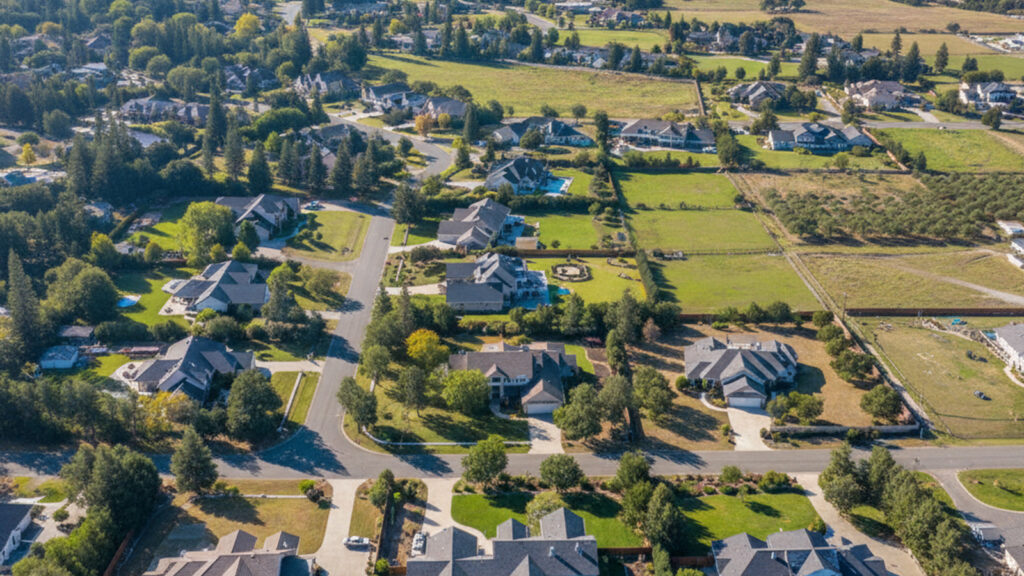
Loomis offers a stark contrast with its distinct small-town feel and less dense population. The community prioritizes space and maintains strong agricultural roots, which is evident in the local zoning laws. Minimum lot sizes are significantly larger here, making it a prime destination for buyers who want acreage.
Zoning directly impacts the daily lifestyle in both locations. Roseville favors walkability to local parks, paved trails, and community centers. Loomis favors private acreage, custom outbuildings, and horse properties. Buyers who want to walk to a coffee shop will prefer Roseville, while those who want space between neighbors will favor Loomis.
2026 Real Estate Market: Median Prices and Property Types
Roseville remains the more accessible real estate market as of early 2026. The median home price hovers around $630,000, driven by a high volume of tract homes and newer developments. Buyers will find plenty of inventory in master-planned communities governed by homeowner associations.
Loomis commands a massive premium due to its land availability and custom housing stock. Median prices here range from approximately $950,000 to over $1.3 million, depending heavily on the amount of acreage included. The market is characterized by custom builds, sprawling equestrian properties, and multi-acre lots.
The takeaway for buyers is clear when looking at the numbers. Those seeking acreage will pay a significant premium to secure property in Loomis. Conversely, buyers prioritizing newer construction and modern subdivision amenities will find far better inventory and pricing in Roseville.
Commuting from Placer County: I-80 to Downtown Sacramento
Professionals commuting to regional employment hubs rely heavily on the I-80 corridor. The typical drive from Roseville to Downtown Sacramento covers 19 to 20 miles. Without traffic, this trip takes approximately 25 to 35 minutes.
Loomis is located slightly further east along I-80, sitting about 25 to 26 miles from the downtown core. This additional distance adds roughly 5 to 10 minutes to the baseline commute time. Both routes are straightforward, but they are subject to the same regional traffic patterns.
Peak rush hour conditions dramatically alter these travel times. Heavy congestion on I-80 can easily push commute times from both cities toward 45 to 60 minutes. Buyers who prefer not to drive can utilize public transit alternatives, such as the Roseville Transit Commuter service, for a more structured trip into the city.
Cost of Living: Utility Rates and Mello-Roos Taxes
Localized taxes and utility providers significantly impact the monthly carrying costs of a home in Placer County. Roseville operates its own city-owned utility, Roseville Electric. This provider consistently offers electricity rates up to 30 to 50 percent lower than regional averages.
Loomis residents rely on the Pacific Gas and Electric Company for their power needs. This provider carries higher per-kilowatt-hour rates and occasional Public Safety Power Shutoff risks during extreme weather. The utility boundary is a major consideration for buyers calculating their monthly budget.
Property taxes introduce a different financial dynamic to the comparison. Roseville’s newer communities, such as West Park, often carry Mello-Roos taxes to fund local infrastructure. These assessments can add $150 to $300 monthly, or thousands of dollars annually, to a tax bill.
Loomis properties generally lack these Mello-Roos assessments. The absence of these extra property taxes in Loomis often helps balance out the higher utility costs associated with the regional power provider.
Evaluating Local School Districts
Roseville is primarily served by the Roseville Joint Union High School District. This district is known for offering robust Advanced Placement and International Baccalaureate programs. The schools operate on large, modern campuses designed to accommodate a growing suburban population.
Loomis relies on the Loomis Union School District as its primary K-8 provider. This district is recognized for its rigorous academic standards and smaller campus environments. High school students in Loomis typically feed into Del Oro High School, which falls under the Placer Union High School District.
Both cities are anchored by highly rated educational infrastructure. The choice between them rarely comes down to academic quality alone. Instead, it depends on whether a buyer prefers a large, comprehensive campus environment or a smaller, more tight-knit school setting.
Proximity to Outdoor Recreation
Roseville features an extensive network of paved, multi-use paths designed for daily use. The Miner’s Ravine Trail is a standout feature, providing miles of accessible routing for cyclists and joggers. The city focuses heavily on structured, well-maintained parks integrated directly into residential neighborhoods.
Loomis provides immediate access to rugged, nature-based recreation. The town sits in close proximity to Folsom Lake, which serves as a massive regional draw. Residents have quick access to boating, hiking, and miles of dedicated equestrian trails.
The recreational divide perfectly mirrors the housing divide. Roseville favors structured, community-based recreation that is easily accessible from a subdivision. Loomis favors expansive, nature-based activities that align with its rural atmosphere.
Frequently Asked Questions
Is Loomis more expensive than Roseville?
Yes, Loomis carries a significantly higher median home price. This premium is driven by larger lot sizes, custom home builds, and the availability of acreage. Buyers pay a premium for the space and privacy that Loomis offers.
Does Loomis have Mello-Roos taxes?
Mello-Roos assessments are very rare in Loomis. They are much more common in Roseville’s newer suburban developments, where they fund local infrastructure. This lack of extra tax helps offset other carrying costs in Loomis.
Which city has better schools, Roseville or Loomis?
Both areas feature highly rated academic programs. Roseville Joint Union and Loomis Union offer excellent educational infrastructure. Neither is objectively superior, as the choice depends on preferred school size.
Is Roseville Electric available in Loomis?
No, Roseville Electric is restricted strictly to the Roseville city limits. Loomis residents receive their electricity through the Pacific Gas and Electric Company. This means Loomis homes generally face higher monthly utility rates.