
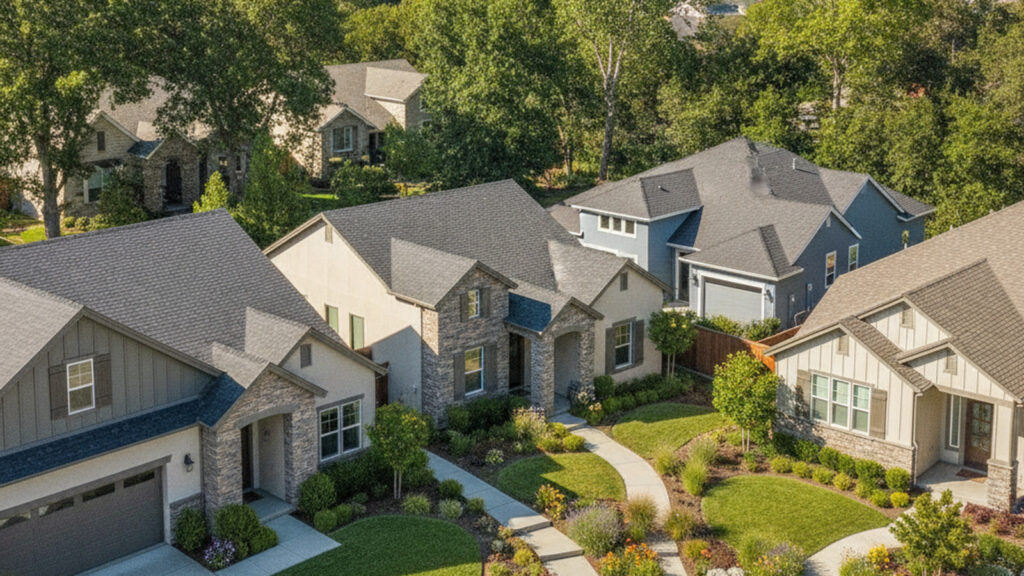
Roseville is easily one of the most desirable places to land in Northern California. Between the shopping at the Galleria, the endless trails, and the incredible weather, it’s no surprise that people are relocating here in droves. But when you’re browsing homes in Roseville, the list price is only part of the story.
Most buyers have their mortgage calculator ready to go, but they often overlook the two other line items that can make or break a monthly budget: HOA fees and Mello-Roos taxes.
If you are moving from an area where these costs aren’t common, the setup here can be a bit confusing. An HOA (Homeowners Association) fee pays for the private perks of your specific neighborhood, while Mello-Roos is a special tax that funds local infrastructure like roads and schools. Understanding how these work—and which neighborhoods have them—is the key to avoiding “payment shock” after you close.
What Do HOA Fees Typically Cover in Roseville?
One of the first questions buyers ask me is, “Why am I paying this fee, and where does the money go?” It’s a fair question. Nobody wants to feel like they are just throwing money away. However, in many Roseville communities, these fees actually maintain the value of the neighborhood and fund the lifestyle amenities that drew you here in the first place.
For most single-family homes, the HOA fee primarily covers common area maintenance. This includes keeping the entryways, medians, and neighborhood parks looking pristine year-round. If you drive through a community where the landscaping is impeccable and the sound walls are well-maintained, that’s usually your HOA dollars at work.
In master-planned communities, your money goes a lot further. The fees often fund access to exclusive amenities like clubhouses, fitness centers, swimming pools, and sports courts. Instead of paying for a separate gym membership or maintaining your own pool, you get access to shared facilities.
For condos and townhomes, the coverage is more extensive. These fees typically cover exterior maintenance—like the roof, siding, and painting—as well as hazard insurance for the building structure. Additionally, a portion of every monthly payment goes into “reserves.” This is essentially a savings account for the community to handle future big-ticket repairs, like repaving private streets or replacing fencing, without hitting residents with a sudden bill.
Average HOA Fee Ranges by Property Type (2026)
Because Roseville has such a diverse mix of housing, fees can vary wildly from one street to the next. As of early 2026, here is what you can generally expect to pay based on the type of home you are buying.
- Single-Family Homes (Standard) In many standard subdivisions, HOA fees are surprisingly low or even nonexistent. When they do exist, you are often looking at a range of roughly $0 to $150 per month. At the lower end, this might just cover basic landscape management for the common strips of grass and signage.
- Condos & Townhomes If you are looking at condos for sale in Roseville, expect the fees to be higher, typically landing between $300 and $450+ per month. While this sounds steep compared to a single-family home, remember that this fee usually replaces your individual homeowner’s insurance policy for the structure and covers all exterior repairs. It simplifies your budget by bundling maintenance costs.
- Active Adult (55+) Communities Roseville is famous for its active adult communities. Fees here generally fall in the moderate range of $170 to $250 per month. Considering these communities often provide huge clubhouses, full-time staff, and organized social calendars, many residents feel this offers the highest “bang for your buck.”
- Luxury & Gated Neighborhoods For exclusive gated communities in Roseville, fees can exceed $300 to $500 per month. These neighborhoods often have private roads (which the city doesn’t maintain), 24-hour security guards or electronic gates, and sometimes even golf-related amenities that require significant upkeep.
HOA Fees in Top Roseville Neighborhoods
To give you a grounded idea of what this looks like in the real world, let’s look at the approximate costs for some of the most popular local neighborhoods. Keep in mind that these numbers are estimates as of 2026 and can change annually based on the board’s budget.
- Sun City Roseville: This is the heavyweight of 55+ living here. You are looking at approximately $225 per month. That fee gets you access to the Timber Creek Lodge, pools, pickleball courts, and discounts on the golf courses. It’s a comprehensive lifestyle package.
- The Club at Westpark: Another major active adult community, with fees hovering around $177 per month. This covers the front yard maintenance (a huge perk) and access to The Retreat clubhouse, which includes a gym and concierge services.
- The Villas at Diamond Creek: For a typical condo example, fees here often range from $300 to $400 per month. This covers the exterior of the buildings, the pool, the fitness room, and common grounds maintenance.
- Highland Reserve / Diamond Oaks: If you are strictly anti-HOA, these are the areas to look. Many homes in these established neighborhoods have $0 in monthly dues. You just take care of your own property, and the city maintains the public spaces.
- Morgan Creek: This is a luxury golf course community. Fees here are higher and vary by the specific village within the development, but they support the private gates, private roads, and the upscale golf course aesthetic that defines the area.
The Mello-Roos Factor: The Hidden “Fee”
We can’t talk about monthly costs in Roseville without addressing Mello-Roos. This is the number one source of confusion for people moving to Roseville CA from out of the area.
Mello-Roos is not an HOA fee. It is a special tax district used to finance infrastructure in newer developments—think new schools, new roads, and police stations. While an HOA fee is paid to a private management company, Mello-Roos is paid directly with your property tax bill.
However, the impact on your monthly budget is exactly the same as an HOA fee. In newer parts of the city, like West Roseville (Fiddyment Farm, WestPark), Mello-Roos can easily add $200 to $400+ per month to your effective housing payment.
In contrast, older “East Roseville” neighborhoods often have no Mello-Roos because the infrastructure there was paid off decades ago. This creates an interesting trade-off: a home in West Roseville might have a low $50 HOA but a high $300 Mello-Roos, while a home in East Roseville might have no Mello-Roos and no HOA. Always ask your lender to run the full numbers so you aren’t surprised by the tax bill.
How Fees Impact Your Purchasing Power
When you apply for a mortgage, the lender looks at your total monthly debt obligations to calculate your Debt-to-Income (DTI) ratio. They treat HOA dues exactly the same as a car payment or credit card bill.
This means that a high HOA fee directly reduces the loan amount you qualify for. For every $50 increase in monthly HOA fees, your purchasing power might drop by roughly $10,000, depending on current interest rates. If you are maxing out your budget to buy a home, a $300 condo fee might mean you have to look at properties priced significantly lower than you initially thought.
It is also important to be aware of special assessments. If an HOA hasn’t saved enough money in its reserves and the condo building needs a new roof, the board can levy a “special assessment.” This is a mandatory extra fee that every owner must pay, sometimes totaling thousands of dollars. This is why digging into the financials before you buy is critical.
Comparing Roseville Costs to Nearby Areas
If you are coming from the Bay Area, Roseville’s fees will likely feel like a relief. It is not uncommon to see HOA dues in San Jose or San Francisco ranging from $600 to over $900 per month for older buildings. By comparison, getting a robust amenity package in Roseville for $200 is a steal.
When compared to Sun City Lincoln Hills in nearby Lincoln, the costs are very similar. Fees there are also in the ballpark of $175–$200 monthly. The choice between Sun City Roseville homes for sale and Lincoln usually comes down to location preference rather than a major difference in monthly fees.
However, if you look toward Sacramento—specifically areas like Natomas—you might find higher costs. Natomas has many HOA communities that also require flood insurance, which adds another layer of expense. Roseville generally remains very competitive when you look at the “all-in” monthly cost.
How to Research HOA Financial Health
Once you get into contract on a home, you will receive a stack of documents called the HOA package. Do not just skim these. They are your best window into the future of your wallet.
First, read the CC&Rs (Covenants, Conditions, and Restrictions). These are the rules of the road. They dictate whether you can park your RV in the driveway, what color you can paint your house, and what the rules are for pets.
Second, check the Reserve Study. This document analyzes how much life is left in major components (like the pool or roads) and how much cash the HOA has in the bank. You generally want to see a “percent funded” number above 70%. If it’s below 30-40%, there is a high risk that dues will go up, or a special assessment is coming soon.
Finally, look for mention of litigation. If the HOA is currently being sued (or is suing a developer), many lenders will refuse to finance a mortgage on the property. Checking the meeting minutes from the last 12 months is a great way to spot drama or discussions about upcoming fee hikes that haven’t been officially announced yet.
Frequently Asked Questions
Are there homes in Roseville with no HOA fees?
Yes, absolutely. Many of the established neighborhoods in East and Central Roseville, such as Highland Reserve, Diamond Oaks, and areas near Downtown Roseville, do not have Homeowners Associations. These areas are popular with buyers who want full control over their property and lower monthly fixed costs.
Do HOA fees in Roseville cover utilities?
Generally, no. In most single-family and active adult communities, you are still responsible for your own water, trash, electricity, and gas. However, in some condo complexes, the monthly fee may include water, sewer, and garbage services, so it is worth checking the specific listing details.
How often do HOA fees increase in California?
HOA boards typically review the budget annually and fees often adjust at the start of the fiscal year. Under California law, boards can generally raise regular dues by up to 20% per year without a membership vote, though most increases are much smaller—usually just enough to keep up with inflation and insurance costs.
Is Mello-Roos the same as an HOA fee?
No. An HOA fee is paid to a private non-profit organization to manage the community’s amenities and rules. Mello-Roos is a special property tax assessed by a Community Facilities District to pay for public infrastructure like schools and roads. You might have one, both, or neither, depending on the specific neighborhood.
