

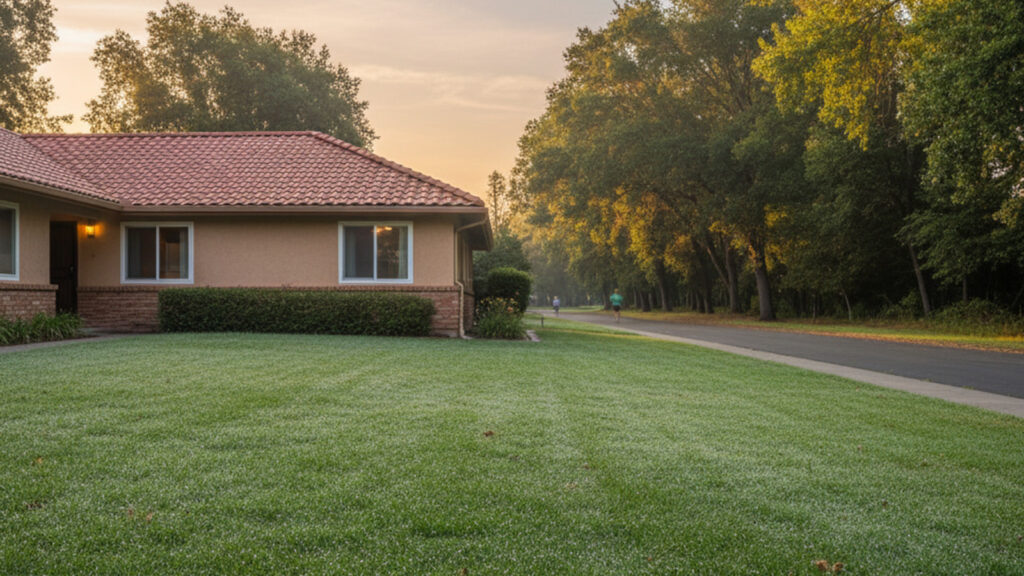
If you have driven down Galleria Boulevard on your way to Best Buy or Nordstrom Rack, you have likely passed right by the Creekside neighborhood without even realizing people live there.
Nestled quietly between the bustle of the Creekside Town Center and the open space of the creek trails, this neighborhood is a true “hidden gem” in Roseville. It is a small, tight-knit residential pocket that offers a rare combination: you are seconds away from the city’s biggest retail hub, yet you back up to nature trails that feel miles away from the city.
For buyers who value walkability and instant freeway access (I-80 and Hwy 65 are right there), Creekside is hard to beat. But because it sits near the water and major commercial zones, there are specific things you need to know about safety, costs, and zoning before you make an offer.
Creekside Neighborhood vs. Creekside Town Center
Before we dive into the numbers, let’s clear up the biggest confusion for newcomers. There are three distinct “Creeksides” in this immediate area, and they are all different.
- The Residential Neighborhood: This is the collection of single-family homes and duplexes tucked away south and east of the shopping centers. When a local agent talks about “buying in Creekside,” this is usually what they mean.
- Creekside Town Center: This is the major retail power center containing stores like Best Buy, Barnes & Noble, and various restaurants. It borders the neighborhood but is commercially zoned.
- The Preserve at Creekside: This is a specific apartment community located on Antelope Creek Drive. These are rental units with their own leasing office and amenities. If you see a listing with “clubhouse” or “leasing office” fees, you are likely looking at The Preserve, not a purchase-market home.
Creekside Real Estate Market & Homes for Sale
Because this residential pocket is so small compared to sprawling master-planned communities like West Park, inventory here is incredibly tight. You won’t see “For Sale” signs pop up every weekend.
Most homes in Creekside were built in the late 1980s through the 1990s. You will typically find single-story ranchers and two-story contemporary homes that feature the stucco and tile aesthetic common in that era.
Pricing here is generally more accessible than the brand-new builds out west. You can typically expect homes to trade in the $500,000 to $700,000 range, though this fluctuates with square footage and renovation levels.
One dynamic to watch: because the location is so prime (walking distance to the mall and major employers), there is a healthy mix of owner-occupied homes and investment rentals. It is a popular spot for landlords, which keeps rental demand high but can sometimes mean competitive bidding if a well-priced starter home hits the market.
HOA Fees and Community Rules in Creekside
If you are trying to avoid monthly HOA dues, Creekside is a great place to look.
Single-Family Homes Most of the detached single-family homes in the Creekside neighborhood do not have a mandatory Homeowners Association (HOA) or monthly dues. This is a significant financial advantage over newer Roseville communities where HOA fees can run $150+ per month.
The Preserve / Apartments If you are looking at a condo-style unit or renting at The Preserve, those will have their own management structures, rule books, and fees (including pet rent and breed restrictions).
CC&Rs Still Apply Even without an HOA, the neighborhood is subject to city codes and original CC&Rs (Covenants, Conditions, and Restrictions). This means standard rules about RV parking, noise, and property maintenance are enforced by the City of Roseville, not a private board.
Environmental Safety: Floods, Fire, and Power
This is the most important section for due diligence. The neighborhood is named “Creekside” for a reason—it sits right next to the tributaries of Dry Creek and Antelope Creek.
Flood Risk
Parts of this neighborhood are located in or near the 100-year floodplain. While the City of Roseville has done massive mitigation work since the historic floods of 1986 and 1995 (strengthening levees and improving drainage), the risk isn’t zero.
Prudent buyers should always check the official FEMA flood maps for the specific address they are interested in. If the home is in a designated high-risk zone, your lender will require flood insurance. Even if it’s not required, many locals carry it anyway for peace of mind—it’s often quite affordable if you aren’t deep in the high-risk zone.
Power Reliability
On the positive side, living here means you are served by Roseville Electric. This is a community-owned utility, not PG&E. Rates are typically 30% to 50% lower than surrounding areas, and reliability is excellent.
Weather Risks
We don’t really do tornadoes here. The primary weather risk in winter is localized street flooding during heavy “Atmospheric River” storms. However, the drainage systems in Creekside are well-tested, and the city is proactive about clearing the creek channels before winter.
Schools Serving the Creekside Community
For families, the school district is often the deciding factor. Creekside is served by two highly regarded districts: the Roseville City School District (K-8) and the Roseville Joint Union High School District (9-12).
- Elementary (K-5): Most homes here are zoned for Stoneridge Elementary or a similarly nearby school. Stoneridge is well-rated and known for strong parent involvement.
- High School (9-12): Historically, this area has fed into Roseville High School (the Tigers), which is the city’s historic flagship school. However, boundaries can shift, and newer schools like West Park are impacting enrollment flows. Always verify the specific address with the district locator before closing.
- Higher Education: You are also a very short commute to Sierra College if you have students looking at community college options.
Lifestyle: Shopping, Parks, and The Trail System
The lifestyle here is defined by “urban walkability” meeting “nature trails.”
Walkable Retail You can literally walk to get a book at Barnes & Noble or grab dinner at the Creekside Town Center. The Roseville Galleria (the massive indoor mall) is just across the street. For residents, this means you rarely have to drive more than 5 minutes for anything—groceries, electronics, or clothes are at your doorstep.
The Trail System Despite the retail density, the neighborhood backs directly onto the Miners Ravine / Antelope Creek trail system. These are paved, multi-use trails perfect for cycling, jogging, or walking the dog. You can ride your bike from Creekside all the way into Downtown Roseville or connect to Royer Park without ever fighting car traffic. It’s a huge perk for active residents who want a break from the suburban pavement.
FAQ: Common Questions About Creekside
Does the Creekside neighborhood in Roseville have an HOA?
Generally, no. Most single-family detached homes in the Creekside residential pocket do not have an HOA or monthly association fees. However, if you are looking at the apartment complexes or specific attached units, management fees will apply.
Is Creekside Roseville in a flood zone?
Yes, portions of the neighborhood near Antelope Creek are within FEMA flood zones. It is essential to check the specific parcel map for any home you are considering, as flood insurance may be required by your lender.
What utility company serves Creekside Roseville?
Creekside is served by Roseville Electric, a city-owned utility. Residents benefit from significantly lower electricity rates and higher reliability compared to nearby areas served by PG&E.
Is Creekside safe?
Creekside is generally considered a safe, quiet residential pocket, but its proximity to a major regional mall means there is more transient traffic and retail activity nearby than in a gated community. The “urban-suburban mix” means you get great convenience, but standard precautions (like locking car doors) are smart.