
Header Coldwell Banker Realty Logo 2020

Best Neighborhoods in Roseville, CA

Tree-lined suburban street with houses.

Roseville sits at the northern edge of the Sacramento area, where tree-lined suburban streets meet major shopping and regional freeways. The city blends long-established subdivisions, newer planned communities, and several amenity-rich pockets that appeal to a wide range of homeowners and buyers. 

If you are looking for homes for sale in Roseville CA, this guide walks through why Roseville attracts interest, describes five of the city’s most talked-about neighborhoods, spots a few areas showing fresh momentum, and offers practical ways a homebuyer can narrow choices.

Why Is Roseville a Desirable Place to Live?

Roseville combines convenient access to Sacramento and the Sierra foothills with a large parks system and regional shopping. As of October 2025 the citywide median sale price was about $609,495, per Redfin; that figure offers a quick snapshot of current market context and helps explain why many buyers watch Roseville when looking beyond the central Sacramento market. 

Public services and local amenities are a real draw. Roseville’s Parks and Recreation department maintains dozens of parks and community facilities including Maidu Regional Park and the Maidu Community Center, which anchor recreation and year-round programming for residents. The city’s location near Interstate 80 and Highway 65 also makes commute options straightforward for drivers headed to downtown Sacramento or points east.

What Are the Top 5 Most Popular Neighborhoods in Roseville?

Below are five neighborhoods that commonly appear in local searches and listings. Each description covers the neighborhood character, typical housing styles, approximate price context, and lifestyle highlights that define the area.

Highland Reserve

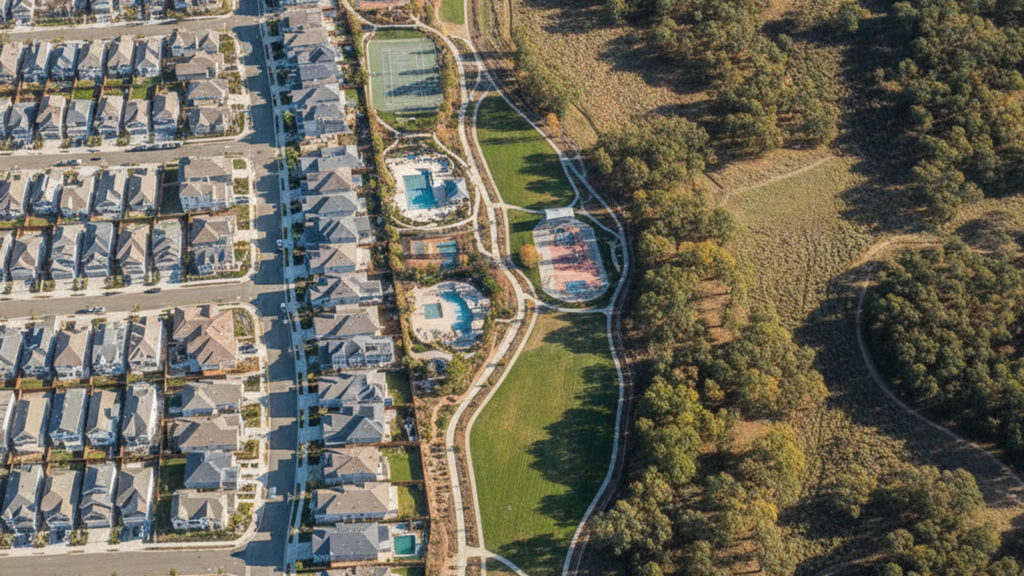
Highland Reserve is a green, well-maintained neighborhood built around parks and mature landscaping. Homes here are mostly single-family detached properties with contemporary floorplans and modest lot sizes; buyers often find three- to five-bedroom layouts and newer finishes. Listings in Highland Reserve frequently sit in the mid-to-upper price band for Roseville, reflecting updated interiors and proximity to nearby shopping centers and schools. The neighborhood’s walkways and pocket parks make weekday errands and short dog walks simple.

Diamond Oaks

Diamond Oaks sits close to Old Roseville and downtown amenities, giving it a slightly denser suburban feel with a mix of original and updated homes. 

Housing ranges from smaller ranch-style homes to larger two-story houses set on well-treed streets. The neighborhood is convenient for those who value proximity to local coffee shops, small retail corridors, and shorter drives to the Galleria area. School options and neighborhood parks are part of the local mix, and Diamond Oaks often shows up in searches for established Roseville neighborhoods with mature street trees.

Fiddyment Farm

Fiddyment Farm is a master-planned community noted for newer construction and thoughtfully designed layouts. You will find modern single-family homes, curated public open spaces, and planned trails that connect to neighborhood amenities. 

Pricing generally tracks toward the middle-to-upper range within Roseville’s newer subdivisions. The area is known for its planned parks and sidewalks that make short walks to amenities straightforward.

Stoneridge

Stoneridge covers a larger specific-plan area that includes several housing clusters and a mix of single-family homes and planned open spaces. The Stoneridge Specific Plan guided much of the neighborhood’s buildout and indicates a mix of home sizes and lot formats, from compact yards to larger properties. 

Stoneridge’s design emphasizes views, trail connections, and buffer spaces between residential areas and larger road corridors. Buyers often choose Stoneridge when they want newer construction standards and a neighborhood planned around community-level amenities. 

Woodcreek Oaks and Johnson Ranch

Woodcreek Oaks and the nearby Johnson Ranch corridor offer an established suburban feel with a range of price points. In this part of Roseville you’ll see mid-sized yards, tree-lined streets, and housing stock that includes the area’s more traditional floorplans. These neighborhoods are often described in local listings as well-maintained with convenient access to shopping centers and recreation nodes. Commuting to Interstate 80 or regional hubs tends to be manageable from this cluster.

What Are Some Up and Coming Neighborhoods in Roseville?

Roseville’s near-term growth is easiest to spot where new planning and construction are concentrated. In general, keep an eye on the city’s eastern edges, corridors being redeveloped for retail or transit use, and areas tied to recently approved specific plans.

  • Areas adjacent to the Stoneridge Specific Plan. These blocks are still seeing new subdivisions and property-level buildouts tied to the plan, so resale activity and neighborhood amenities often accelerate here after initial construction phases.
  • Eastern-edge growth corridors. Land on the city’s eastern boundary is where many builders place newer subdivisions and mixed housing types; these places tend to add trails, pocket parks, and newer local retail within a short time after homes are completed.
  • Corridors near new retail nodes and transit-connected streets. Streets that gain new shopping centers, bus routing, or improved pedestrian connections often attract both builders and buyers looking for convenience.
  • Newly developed master-planned communities. When a master plan finishes its first phase and community amenities come online, those neighborhoods commonly see stronger resale velocity and buyer interest.

To spot the next wave of growth, watch city planning updates, specific-plan amendments, and public infrastructure projects; those documents and notices usually indicate where parks, roads, and retail will land, and those investments tend to lead the market into “up and coming” status. 

Market Signals and Community Features in East and West Roseville

East Roseville and west Roseville offer different strengths in the Roseville real estate market: Westpark, Kaseberg-Kingswood, and pockets near Morgan Creek feature mature trees, walking trails, proximity to parks, and easy access to shopping and dining, including the Galleria Mall, Folsom, and Granite Bay.

Cirby corridors and Diamond Oaks deliver a denser suburban feel with modern homes and gated pockets; established neighborhoods and new developments remain sought-after with strong property values, freeway access, several schools, parks and recreational options, and a friendly community spirit, helping buyers discover the best neighborhoods to live and the top neighborhoods in Roseville.

How to Choose the Right Neighborhood For You?

Start by listing what matters most to your daily life and rank those priorities. Translate each priority into neighborhood traits so you can compare areas on concrete terms rather than rely on labels.

  1. Get financially clear. Know your budget and get pre-approved so you search only where you can realistically buy.
  2. Match priorities to place. If proximity to shopping centers and restaurants matters, focus near the Westfield Galleria corridor; if quieter streets and nearby parks matter, look for interior residential areas with pocket parks and sidewalks.
  3. Check recent sales and inventory. Look at sold prices and time-on-market for the specific zip codes or neighborhoods you are considering to set realistic expectations.
  4. Review school and service assignments. Confirm district and school boundaries for any address you consider, and factor in nearby recreation centers, libraries, and transit options.
  5. Inspect commute routes. Time your drive during commuting times to see if travel times match your needs.
  6. Look at planning and infrastructure updates. City planning documents, upcoming parks, or new retail developments can change a neighborhood’s convenience and resale dynamics.
  7. Talk with a local agent. Use an agent who knows the micro-markets to compare comparable sales, recent listings, and neighborhood nuances that matter to buyers.

FAQs

What are common price ranges for homes in Roseville today?

The citywide median sale price sits at $609,495; specific zip-level medians ranged from roughly $541,000 to $713,000 depending on area and inventory. These figures come from market data aggregated in October 2025 and help set realistic search bands when talking with a real estate agent.

Which parts of Roseville have the most shopping and restaurants?

The Westfield Galleria corridor and nearby commercial strips host the largest concentration of regional shopping and many of the city’s bigger restaurant choices. Downtown Roseville has a smaller, walkable cluster of local restaurants, coffee shops, and services that create a different, more pedestrian-friendly experience.

Are there active-adult communities in Roseville?

Yes. Sun City Roseville is a large planned active-adult community with clubhouses, golf course access, and extensive resident programming; community documentation lists more than three thousand homes. For buyers prioritizing age-targeted amenities, Sun City has an established resort-style approach and an extensive activity calendar. 

What parks and recreation options are available?

Roseville maintains a broad portfolio of parks, sports fields, and community centers. Maidu Regional Park and the Maidu Community Center host sports complexes, playgrounds, and indoor programming; the city’s Parks & Recreation department lists numerous neighborhood parks and trails that support regular outdoor recreation. 

How are local schools organized in Roseville?

Elementary and middle schools generally fall under Roseville City School District and several nearby elementary districts, while high schools are part of the Roseville Joint Union High School District. Each district publishes school lists and attendance maps; use district resources to confirm specific school assignments for a given address.